Smarter Living Labs: New ways to address urban challenges
 SUPSI
SUPSIWorldwide Living Labs are increasingly adopted to address urban challenges. They are projects or experiments devised to design, test and learn from innovative socio-technical practices (i.e. “new ways of doing something”), with a diversity of stakeholders and in real-life conditions. However, they tend to focus on small-scale performance tests or technology-user interactions, and are mostly neglecting the larger social-institutional context that surrounds them.
Therefore, the innovative practices they develop are at risk of limited adoption outside the Living Lab and fail in fully reaching their innovative effect (“upscaling”). Particularly, they tend to engage citizens with both the cognitive and material resources to consume and co-produce the innovation under discussion (“smart citizens”), while citizens lacking such resources are excluded from the innovation process, which further affects later upscaling possibilities. How to design, set up and manage “smarter” Living Labs, which are capable of effectively anticipating constraints on social inclusion and upscaling?
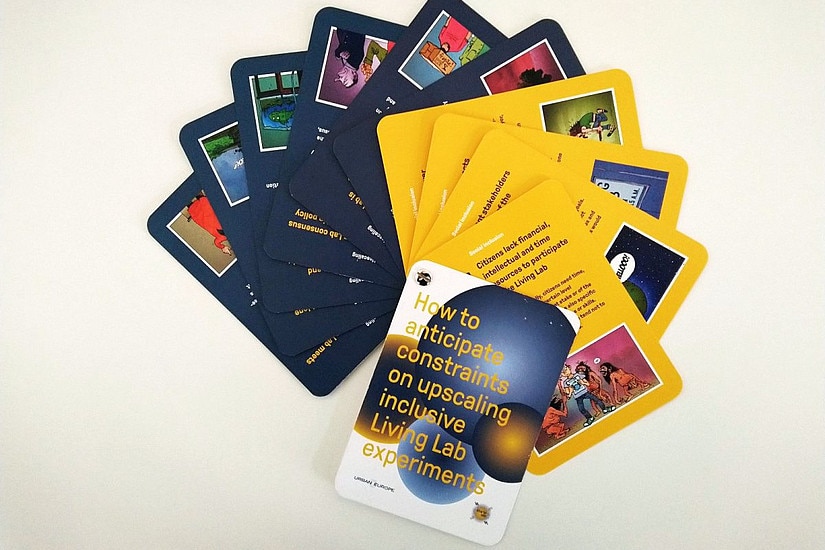
To answer these questions, the SmarterLabs project performed action research activities in Living Lab experiments in four cities (Bellinzona – CH, Brussels – BE, Graz – AT, Maastricht – NL). Their outcome is summarized in the Guidelines for “smarter” Living Labs: recommendations to address the ten most frequent barriers to upscaling and social inclusion in Living Labs. The guidelines are a useful tool for researchers, businesses, citizens, or any other stakeholder who considers organizing or participating in a Living Lab.
Have a look at the Guidelines and watch the video that explains what the „smarter“ Living Lab approach is all about!
The final report of the research activities in Bellinzona, funded by the Swiss Federal Office of Energy, can be accessed here.
Francesca Cellina, University of Applied Sciences and Arts of Southern Switzerland (SUPSI), Institute for Applied Sustainability to the Built Environment (ISAAC)
 keystonePV-Beteiligungsmodelle – gefragt bei Mietern und Eigentümerinnen




Dein Kommentar
An Diskussion beteiligen?Hinterlassen Sie uns Ihren Kommentar!